Most men's style advice online swings between two extremes: either a rigid list of expensive menswear essentials (bespoke suits, Chelsea boots, dress watches) or one-click hairstyle filter apps that paste a celebrity haircut onto your selfie without considering your head shape, glasses, or the shirts you actually wear.
In real life, a sharper everyday look for men almost always comes down to the top 12 inches of your frame: how the side taper and top length of your haircut interact with your facial hair (or clean shave), your eyewear frames, and the collar structure resting on your neck. When those four elements agree with each other, even a simple t-shirt and overshirt look intentional.
Here is how to evaluate those four proportions together, what an AI personal stylist for men can—and cannot—show from a single photo, and how to turn a visual preview into a 5-minute barber and closet routine.
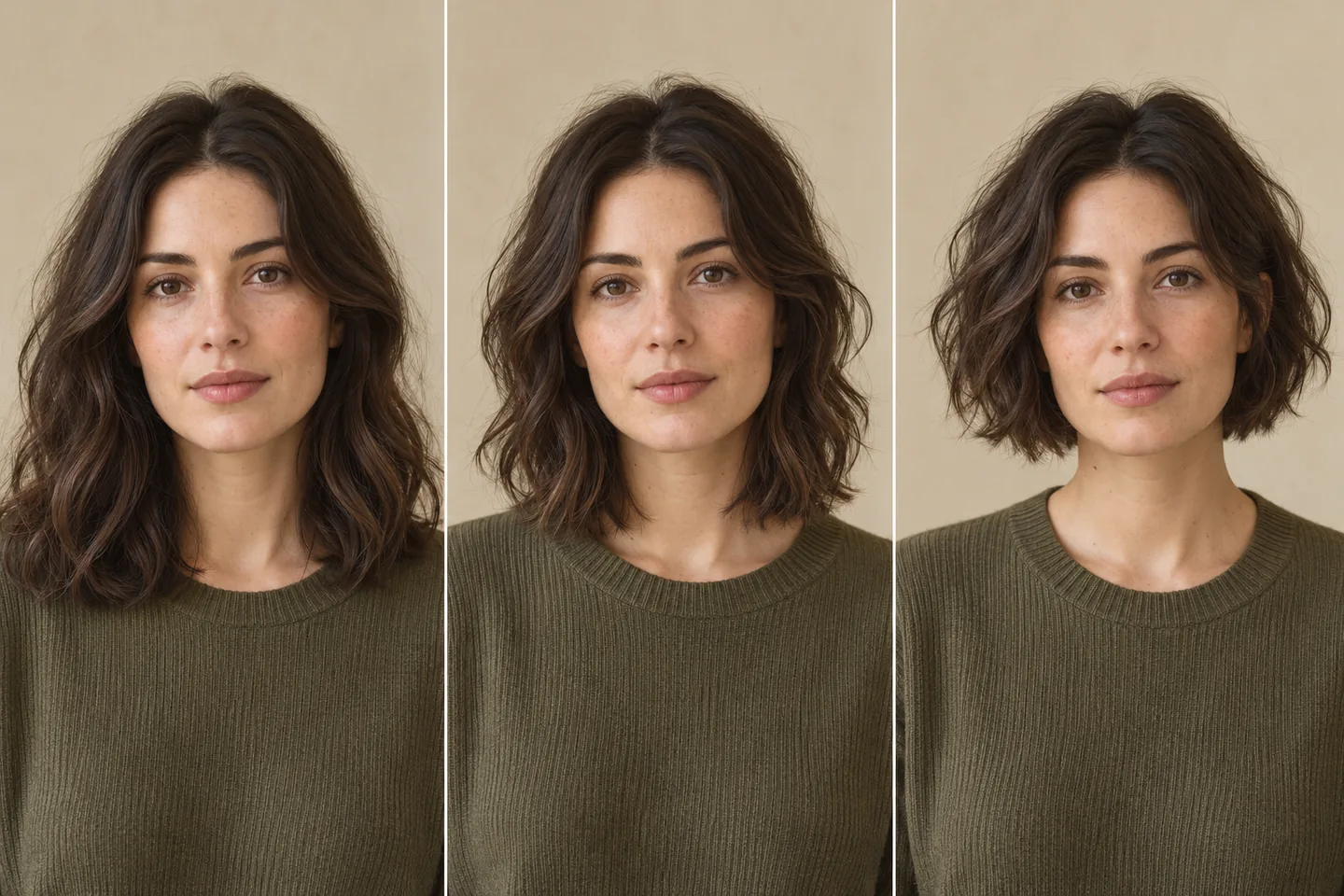
Illustrative AI-generated image: Comparing subtle variations in top texture, parting, and side taper before visiting the barber.
Why men's styling works best from the collar up
When someone meets you in person or on a video call, their eye reads a compact triangle formed by your hairline, temples, jawline, and collar. Small mismatches inside that triangle are usually why a haircut feels "off" two weeks later or why a nice jacket still feels sloppy:
- Side volume vs. ear and jaw width: If your hair grows straight out above the ears, a long-between-cuts taper makes a round or square face look wider at the temples. Conversely, an ultra-high skin fade on a very long or narrow face can over-elongate the head.
- Top height vs. forehead proportion: Pushing hair straight up into a tall quiff lengthens the face vertically, while a textured crop or relaxed side sweep with light fringe softens a high forehead.
- Collar structure: A flimsy, stretched crew neck offers zero structure below the jaw, whereas a heavyweight ribbed crew neck, an Oxford button-down, a polo placket, or an overshirt collar frames the neck cleanly.
Coordinating haircut, facial hair, and glasses
Instead of treating your barber visit, your eyewear, and your morning shave as separate errands, coordinate them as a single visual system:
1. Haircut taper and facial hair balance Facial hair adds visual weight and shadow to the lower half of the face: - **Full beard or boxed beard**: If you wear a fuller beard, keep the cheek line clean and ask your barber for a neat taper around the sideburns so the transition from temple to beard doesn't bulge outward. - **Heavy stubble (3–5 mm)**: Short stubble adds jawline definition without changing your face's silhouette. It pairs well with both short textured crops and medium-length scissor cuts. - **Clean-shaven**: Without beard texture on the jaw, collar choice and sideburn length become more noticeable. A mid-taper that follows the natural bone structure behind the ear keeps the profile sharp.
Before your next appointment, review our step-by-step guide on how to explain your next haircut so you can describe guard numbers, scissor texture, and neckline shape without relying on vague barber jargon.
2. Eyewear frames that fit your brow and haircut If you wear glasses every day, your frames are the centerpiece of your face. As we cover in [how to build a look around your glasses](/blog/build-a-look-around-your-glasses): - **Thick acetate frames** (black, dark tortoiseshell, or bold geometric shapes) carry strong visual weight. Pair them with cleaner, less cluttered hair around the temples so your fringe and sideburns aren't fighting the top bar of the frames. - **Thin metal or rimless frames** leave more of the brow and cheek open, giving you more room for textured waves, longer side-swept layers, or fuller facial hair.
3. Necklines and layers that upgrade casual outfits You don't need to wear a suit to look pulled together. Test these three collar upgrades with [clothes you already own](/blog/a-fresh-look-starts-with-what-you-own): - **The open-collar overshirt**: Wear a structured cotton twill, linen, or wool overshirt open over a solid crew-neck tee. The vertical lapels narrow the torso and frame the neck. - **The polo or Johnny collar**: A knit polo with an open, buttonless V-placket introduces a clean vertical drop below the chin while feeling as comfortable as a t-shirt. - **Color contrast near the face**: If high-contrast black-and-white outfits make your skin look washed out under office lighting, test medium-contrast pairings like navy with heather gray, olive with off-white, or charcoal with muted blue.
What a photo-based AI styling plan can (and cannot) do for men
When you use MyPersonalStyling, you start with one clear, natural-light portrait (see how to take a photo for style analysis) and select your preferences.
What a visual styling report helps you do: - Compare two distinct visual directions—for example, a relaxed smart-casual direction versus a sharper business-casual direction—while keeping your face recognizable. - Review eight illustrated styling cards covering face and proportion overview, key adjustments, grooming details, hair shape, color combinations, everyday outfit pairings, and a practical action checklist, all reviewed by a stylist before delivery (see the sample report and one-time $19.90 pricing). - Test haircut and collar ideas visually before you commit to cutting your hair (how to try a new hairstyle before you cut it).
What a single portrait cannot do: - A selfie does not measure your chest, shoulder slope, sleeve length, or trouser inseam, so it cannot replace a tailor for suit alterations. - An AI illustration does not feel your crown cowlicks, receding hairline density, or coarse hair growth angle—always verify the final cut with your barber or a consultation salon in our city personal stylist and salon directory.