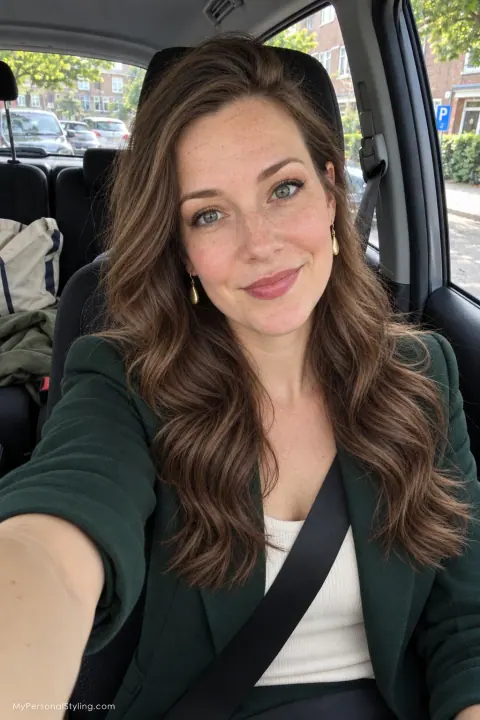
A subtle style refresh for work can begin with one outfit you already wear. Instead of changing your hair, makeup and wardrobe at once, choose a detail to compare, check it during an ordinary day and keep the version that fits your preferences and routine.
Your workplace may have practical or dress requirements, and your clothes should support what you need to do. This is an experiment in personal style, not a rule about how someone must look to be capable or professional.
Start with the day you actually have
Think about a normal workday rather than a special occasion. You might move between a desk and public transport, spend hours on video calls, wear a uniform or need clothes that let you bend and reach comfortably.
Write down three things the outfit needs to do. For example: stay comfortable while sitting, work with your everyday glasses and need little adjustment between meetings.
These notes give you a way to judge a styling idea beyond its appearance in a photograph. A detail that looks appealing but needs constant fixing may not be useful for your day.
Choose a familiar base outfit
Start with a top and trousers, a dress or another combination you already find wearable. Keep the main pieces the same while you compare the details around them.
You do not need to begin with shopping. If you want a more structured starting point, our wardrobe refresh guide explains how to compare combinations using clothes you already own.
For the example below, imagine a shirt, trousers and a lightweight jacket. This is a fictional planning example, not a customer case. Substitute your own clothes and workplace requirements.
Compare one detail near the face
A neckline, hair arrangement or accessory can change the combination without replacing the whole outfit.
Try the shirt with its usual collar arrangement, then compare another version that still feels appropriate for your day. If you wear glasses, keep the same pair in both versions. You could compare small earrings with a pair you normally wear, or simply leave accessories out.
There is no requirement to make every detail quieter or to match every metal. The useful question is which combination you prefer and can comfortably wear. Our glasses styling guide offers more ways to compare necklines, earrings and hair placement.
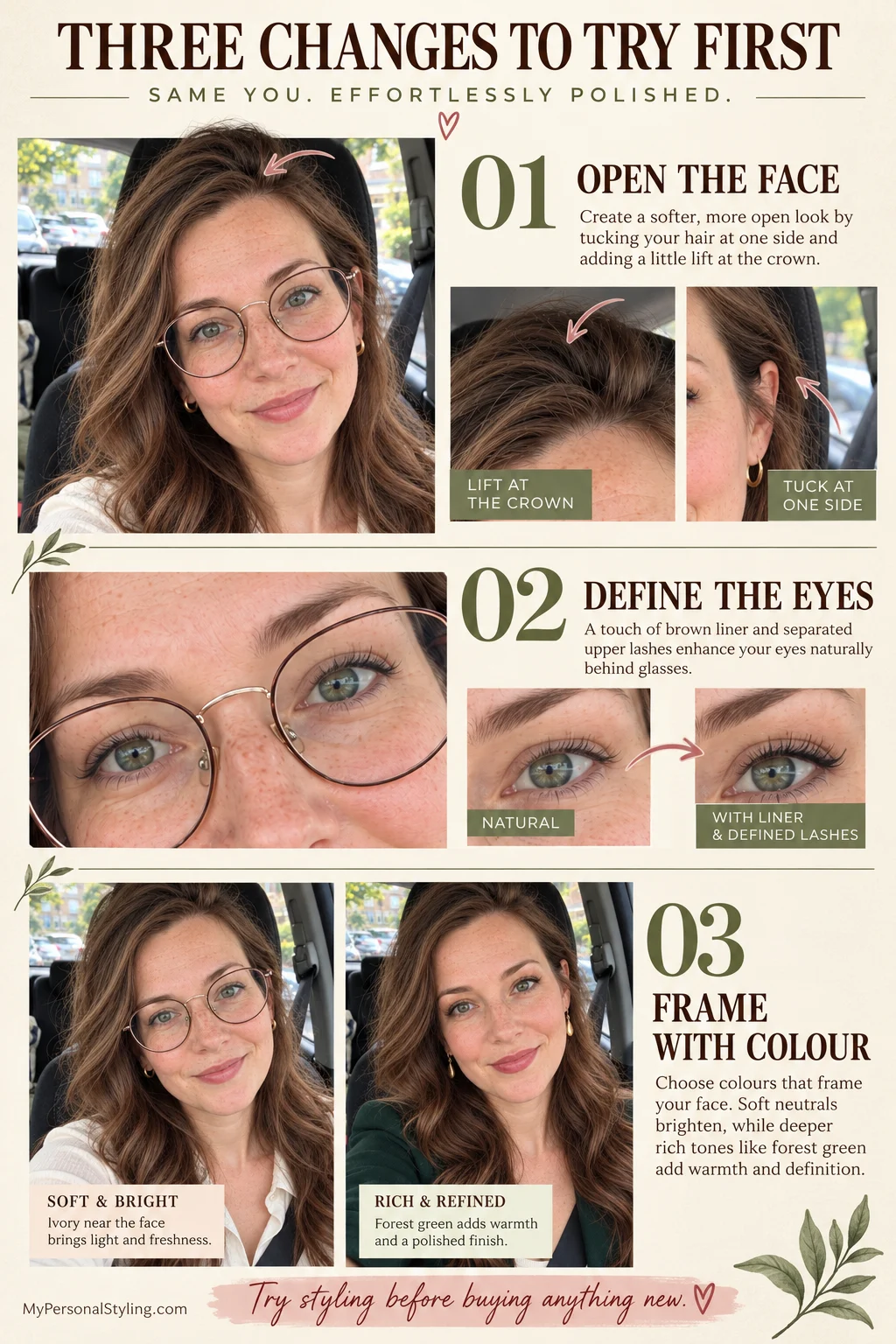
Use two directions to organize your choices
Giving a direction a name can help you compare it, as long as the name does not become a rule.
For the fictional shirt-and-trousers example, one direction might be “easy everyday”: the shirt alone, familiar shoes and the hair arranged as usual. Another might be “a structured layer”: the same base with the jacket and one accessory already in the wardrobe.
These are options to explore. Neither is a better person, a better employee or a required version of you. You can borrow one detail from a direction and leave the rest.
Avoid changing the collar, hair, makeup and accessories all at once for your first comparison. If you change one item at a time, it is easier to see which choice you actually enjoy.
If you wear makeup, choose an optional detail
Makeup does not have to be part of the experiment. If you enjoy wearing it, choose a detail within your usual routine, such as a lip color you already use, rather than feeling you need a complete new application.
Check the result in the lighting where you normally get ready and, if relevant, in the camera setup you use for calls. A screen preview is still only one view; it does not establish how a product will wear throughout the day.
Keep the practical questions visible: will you need to reapply it, does that fit your routine, and do you actually want to wear it? No styling plan needs to make that decision for you.
Try a five-day experiment
- Day 1: record the starting point. Wear your familiar outfit and note what already works. A private photo can help, but you do not need to post it or upload it anywhere.
- Day 2: compare the neckline. Keep the other details stable and choose the version you prefer.
- Day 3: compare a layer or accessory. Use something you already own. Check movement and comfort while sitting.
- Day 4: compare hair placement. Try a tuck or a familiar arrangement without treating this as a haircut decision.
- Day 5: repeat the useful combination. Notice whether you still like it when you are not thinking about the experiment.
Write one sentence at the end of each day: “I would wear this again because \_\_,” or “I would change \_\_ because \_\_.” There is no score to achieve. A useful result can be deciding that your original outfit already works.
When an illustrated plan may help
If you find it easier to compare ideas visually, an illustrated plan can organize hair, makeup and outfits into directions you can discuss or adapt. It should explain the changes and leave room for your preferences.
You can browse the public MyPersonalStyling sample to see two directions, eight illustrated guides and a next-step structure before deciding whether the format is useful to you, or check plan details and pricing. The sample uses fictional AI-generated portraits and report images, not customer results.
A photograph or AI preview cannot establish clothing fit, the contents of your wardrobe or the exact result of a haircut. Start with an idea you can evaluate in real life, and use an in-person professional from our city personal stylist directory for questions that need a hands-on assessment of your actual hair or garment fit.
Save this workday checklist
- My outfit needs to work for: \_\_\_.
- The detail I want to keep is: \_\_\_.
- The one detail I will compare is: \_\_\_.
- I will check comfort while: \_\_\_.
- After a normal day, I would keep: \_\_\_.
The next step can be as small as repeating a combination you already enjoy. Let the experiment serve your day and your preferences.
Frequently asked questions
How can I refresh my work style without buying a new wardrobe?
Start with one dependable workday outfit you already own and change only one detail near your face—such as collar openness, sleeve cuffing, hair placement or a structured outer layer—across five normal workdays. Evaluating comfort and movement during real tasks clarifies what works before you consider shopping.
What should I check before wearing a new outfit combination to an important meeting?
Test the combination while sitting at your desk, reaching, commuting and checking your video-call framing in your normal lighting. If a collar pulls, a layer feels too warm or an accessory needs constant adjusting, simplify the look back to your familiar baseline.
Can an AI makeover preview tell me how work clothes will fit?
No. An AI makeover preview can illustrate how necklines, color contrast, hair placement and accessories work together near the face, but it cannot measure garment tailoring, fabric weight or all-day physical comfort.